 David Henderson
Key Takeaways
- The GE freezer OP door ajar alert usually means exactly that — but a repeating OP with the door closed points at the gasket.
- A worn or dirty gasket can fail to seal and confuse the door sensor at the same time, since both often rely on the same magnetic strip.
- The dollar-bill test is a quick way to check for gaps in the door seal at home.
- A sagging door or one that will not latch points past the gasket to the hinge or latch mechanism.
- Diagnostic work starts from $89 and usually confirms a straightforward gasket replacement.
The Bottom Line
The GE freezer OP door ajar alert is routine when it clears after closing the door, and a maintenance issue when it keeps returning. Check the gasket first with the dollar-bill test before assuming a sensor fault.
A standalone GE freezer that shows OP is reporting a door left open or ajar — and while the fix in the moment is simply closing the door, the GE freezer OP door ajar alert repeating on its own is a maintenance signal worth acting on before it turns into a much bigger problem than a beep.
| Pattern | Likely cause | Action |
|---|---|---|
| OP clears when door is pushed shut | Door was genuinely left ajar | No action needed |
| OP returns within minutes of closing | Worn gasket not sealing | Inspect and clean the gasket |
| OP with visible frost buildup | Seal has been failing for a while | Replace the gasket |
| OP with door that will not latch | Hinge or latch mechanism worn | Book a repair visit |
What Does the GE Freezer OP Code Mean?
OP means the control has detected the door open or ajar for longer than the freezer allows before it starts alerting. This is one of the most common alerts on a standalone freezer, and the large majority of the time the cause is exactly what it sounds like — someone left the door open, or it was pushed shut without quite latching. The alert exists because a freezer's contents can rise several degrees within minutes of the door staying open, and a chest or upright freezer holding weeks of frozen food has more to lose from a slow leak of cold air than most other appliances in the kitchen.
Where this stops being a one-time event and starts being a maintenance issue is when OP keeps returning after the door has clearly been closed. That pattern almost always traces back to the door gasket — the rubber seal running around the door frame — rather than anything electrical.
Why the Door Gasket Is the First Thing to Check
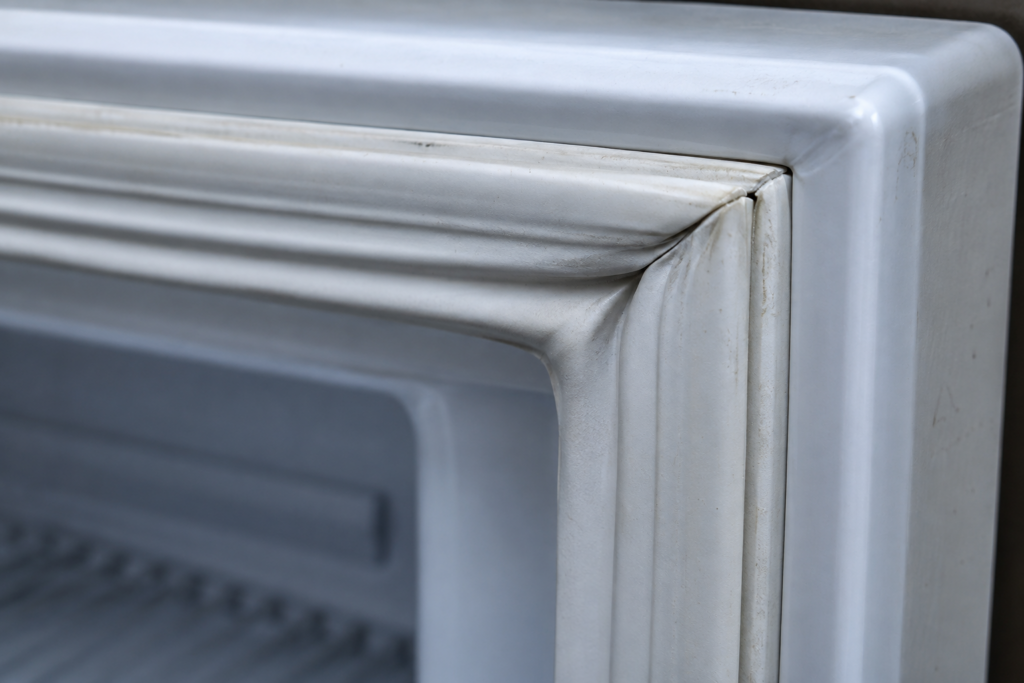
A freezer door gasket does two jobs: it holds the cold air inside, and its magnetic strip is often what the door-open sensor reads to determine whether the door is fully seated. A gasket that has hardened, cracked, or picked up a food residue film can fail at both jobs at once — the seal lets warm air in, and the sensor reads a door that looks closed but is not sealing.
- Wipe the gasket down monthly with warm water and mild soap — grease and food residue are the most common reason a gasket stops sealing years before it physically wears out.
- Check the seal with a dollar bill test. Close the door on a bill at several points around the frame; if it pulls out easily anywhere, the seal has a gap there.
- Look for visible cracking or flattening in the rubber, especially near the hinge side, where the gasket flexes the most.
- Keep the freezer level. A freezer that leans even slightly can prevent the door from seating evenly against the gasket on one side.
How Often to Check a Freezer Door Seal
Check it every few months as routine upkeep, and immediately if OP starts appearing more than once in a normal week. A gasket that is failing gradually rarely announces itself with a dramatic symptom — frost building up unevenly along one edge of the door frame, or a faint hum from the compressor running more than it used to, are both quieter signs that the seal is losing its grip well before OP starts firing regularly.
This kind of preventive check belongs in the same routine as the rest of a freezer's upkeep — clearing dust from the condenser coils, confirming the interior temperature with a separate thermometer rather than trusting the display alone, and keeping the unit level. Our GE refrigerator and freezer maintenance guide lays out the full seasonal schedule.
When Is OP More Than a Gasket Problem?
Three signs point past the gasket and toward the hinge, the latch, or the frame itself:
- The door visibly sags or does not sit flush with the cabinet — a hinge issue, not a seal issue.
- The door will not stay shut on its own even when pushed firmly closed, pointing at the latch mechanism.
- OP appears even with a brand-new gasket installed, which usually means the sensor itself or its wiring needs attention rather than the seal.
Any of these is worth a technician visit rather than another gasket swap. Our freezer repair service covers the door hardware, the gasket, and the sensor together, and our preventive maintenance plan catches a failing seal before it starts costing you food.
What a Good Prevention Routine Looks Like
A standalone freezer rewards a short, regular routine far more than an occasional deep clean, since most of what damages a gasket happens slowly:
- Monthly: wipe the gasket, run the dollar-bill test at four points around the frame, and confirm the unit sits level.
- Every three months: vacuum the condenser coils or grille and check for frost building up unevenly along one edge of the door.
- Twice a year: confirm the interior temperature with a separate thermometer rather than relying on the display alone.
- Any time OP appears more than once in a week: stop and check the gasket before assuming it will resolve itself.
- Once a year: inspect the hinge screws and the latch strike plate for looseness, since a door that has drifted slightly out of alignment puts uneven pressure on the gasket long before the gasket itself shows visible wear.
None of this takes more than a few minutes at a time, and it is far cheaper than the alternative — a freezer full of food that has partially thawed and refrozen because a seal failed quietly over several weeks. A chest freezer in a garage or basement is worth checking slightly more often than one in a climate-controlled kitchen, since temperature swings in an unheated space stress a gasket faster than a stable indoor environment does, and the same swings make a marginal seal more likely to show its age with an OP alert rather than staying silent until it fails outright. A freezer that runs the maintenance routine above consistently will usually go years between anything more than a wipe-down, and the small amount of time it takes each month is far less than the time lost dealing with a chest freezer full of refrozen food after a seal failure went unnoticed for weeks.
What Does a Door Seal Repair Cost?
Diagnosing a repeating OP alert starts from $89, which is often all it takes to confirm a gasket replacement rather than anything more involved. If the freezer is also showing a related alert like SH — a temperature sensor failure — the two issues are diagnosed together in the same visit rather than separately. Schedule a visit if the dollar-bill test shows a gap anywhere around your door, or if OP keeps returning after you have confirmed the door is closing all the way.