 David Henderson
Key Takeaways
- Wash the grease filter monthly in warm soapy water, and more often if you cook with a lot of oil.
- A recirculating GE over-the-range microwave needs its charcoal filter replaced about every 6 months; a vented one does not use it.
- Mount the microwave at the height in its installation guide, and measure the gap again if the range or cooktop has been replaced.
- The exhaust damper should open and close freely; a stuck damper makes the fan work against a closed door.
- A microwave that shuts off mid-cycle or has a very hot exterior should be stopped and inspected.
The Bottom Line
Clean the grease filter monthly, replace the charcoal filter on a recirculating model about every 6 months and check the mounting gap against the installation guide. If it still overheats or shuts off, have it inspected; the price is confirmed after diagnosis, with a written estimate before work begins.
A microwave mounted above the range does two jobs: it heats food, and it pulls steam, smoke and grease away from the cooktop beneath it. The second job is the one that quietly stops working. The filters clog, the fan labors, the damper sticks, and nothing about the cooking changes until the microwave shuts itself off in the middle of a cycle or the cabinet above it turns greasy. This guide covers the venting side of a GE over-the-range microwave: what to clean, what to replace, how the mounting gap matters and which signs mean it is time to call.
| Part | What it does | How often to look |
|---|---|---|
| Grease filter | Catches grease from the cooktop below | Monthly: wash in warm soapy water |
| Charcoal filter (recirculating models) | Cleans the air before it returns to the room | Replace about every 6 months |
| Exhaust damper | Opens to vent outdoors, closes when idle | Check that it moves freely |
| Mounting height and gap | Sets the clearance above the cooktop | Check against the installation guide |
| Cooling and vent fan | Moves air through the microwave and out | Listen for strain or a change in sound |
How Does GE Over-the-Range Microwave Venting Work?
It works one of two ways, depending on how it was installed. A vented installation sends the air through a duct to the outdoors, and a recirculating installation pushes it through a charcoal filter and back into the kitchen. Which one you have decides what maintenance applies, and the easiest way to tell is to look at the top of the microwave and the cabinet above it for a duct, or to read the installation guide for your model.
Our GE microwave venting clearance advisory sets out the clearances and filter intervals this guide builds on, and the notice on range hood ventilation maintenance covers the same airflow on the hood side.
How Often Should the Grease Filter Be Cleaned?
About once a month, and more often if you fry or sear a lot. The metal mesh filter under the microwave catches grease that would otherwise coat the fan and the cabinet above, and a clogged filter forces the fan motor to work harder while removing less steam. The advisory on this site says to wash it in warm soapy water monthly.
- Slide it out. Most filters release with a latch or a tab at one end; the manual shows yours.
- Soak and scrub gently. Warm water with dish soap and a soft brush loosens the grease.
- Dry it fully. Put it back only when it is dry.
- Check the underside. A sticky film on the metal around the filter means the grease has been passing through.
When Should the Charcoal Filter Be Replaced?
On a recirculating model, about every 6 months according to the advisory, because a charcoal filter cannot be washed and a clogged one reduces airflow. It is a different part from the grease filter and usually sits behind a panel at the top or back of the microwave. A vented installation does not use one.
- Use the part for your model. Filters differ in size and fit.
- Do not skip it. A spent filter returns cooking odor to the room and makes the fan work harder.
- Write the date on the filter or in a calendar. It is the part owners forget most easily.
Mounting Height and the Gap Above the Cooktop
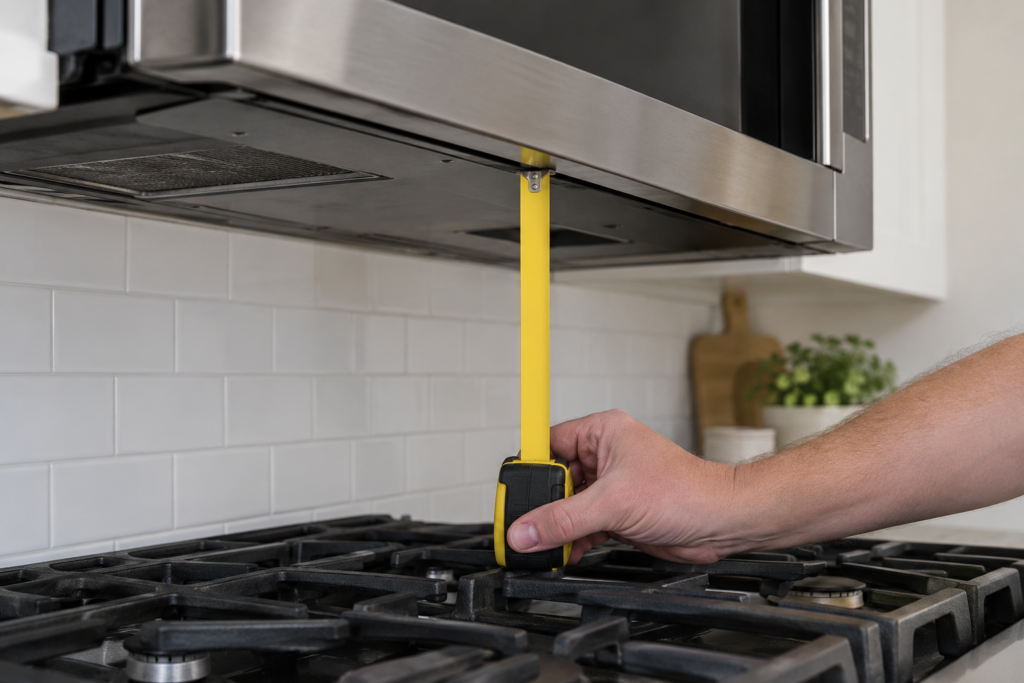
The microwave has to sit at the height given in its installation guide, with the clearances the guide lists. The advisory on this site says to confirm that an over-the-range unit is mounted at the specified height. Too low and the cooktop's heat and steam load the microwave's underside and controls, too high and the vent is less effective. If a range or cooktop has been replaced, the gap may have changed, so measure it again.
The side clearances in the advisory, at least 3 inches on the sides, rear and top, are given for countertop models. For an over-the-range unit, the installation guide for your model is the reference, and measuring against it takes only a tape measure.
- Measure from the cooktop surface to the underside of the microwave. Compare the figure with the guide.
- Check the cabinet above. It should not be blocking the top vent.
- Look at the wall mount. A unit that has sagged or tilted changes the gap.
The Exhaust Damper and the Fan
The damper is a small flap that opens when the fan runs and closes when it stops, and the advisory says it should open and close freely. A damper stuck shut makes the fan labor against a closed door, and one stuck open lets outside air back in. With the microwave off, you can often see or feel whether it moves.
On a vented installation, look at the outside end of the duct as well, where there is usually a hood or cap with its own flap. Lint, nests and winter debris can jam that flap, and a blocked outlet has the same effect as a clogged filter: the air has nowhere to go. A recirculating installation has no outside flap, so a weak airflow there comes back to the filters and the fan.
The fan itself gives warnings. A new rattle, a hum that was not there before or a fan that runs but moves little air each point to a restriction or a part that is wearing out. Related heat symptoms matter too: if the exterior of the microwave becomes very hot to the touch, or the microwave shuts off during use, stop using it and have it inspected, because the advisory ties both to thermal overload.
When to Book a Visit
When cleaning and the right filter do not fix it. A microwave that still shuts off on thermal overload after the filters are clean and the gap is right needs someone to look at the fan, the damper and the thermal protection, none of which a homeowner should open. A diagnostic visit starts from $89, with the final price confirmed after diagnosis and a written estimate before work begins.
- Shuts off mid-cycle. Especially after a few minutes of running the vent fan.
- The exterior is very hot. Stop using it until it has been inspected.
- The fan is loud or weak. After the filters have been cleaned and replaced.
- Grease on the cabinet above. A sign that the airflow is leaking where it should not.
For the full routine on the rest of the kitchen, the GE range and oven maintenance guide pairs well with this one, and our GE microwave recall check explains how to confirm a unit is not subject to an official recall. To book, schedule a visit or read about GE microwave repair.