 David Henderson
Key Takeaways
- Clean a GE glass cooktop only when it is cool, with a damp soft cloth, a cooktop cleaner and a dry buff.
- A scraper made for ceramic cooktops is the right tool for burnt-on residue, used at a shallow angle on a cooled surface.
- Dragging cast iron, dropped cookware and cold items on a hot zone are the usual causes of cracks.
- Liquid can reach the electronics through a crack, so a cracked cooktop is not used.
- Inspect the glass for chips before each use and check the residual heat indicator after cooking.
The Bottom Line
Clean cool glass with a soft cloth, a cooktop cleaner and a proper scraper, lift pans instead of sliding them, and stop using the cooktop at the first crack. The price of any repair is confirmed after diagnosis, with a written estimate before work begins.
Glass cooktops are easy to wipe and easy to damage, and most of the damage is done during cleaning or in the minutes right after cooking. Scratches, cloudy patches and cracks usually trace back to a habit, not a defect. This guide sets out a routine for GE glass cooktop cleaning that keeps the surface clear and the electronics under it dry, based on the care steps in the site's own glass surface notice.
| The mess | What to use | What to avoid |
|---|---|---|
| Light spills and splashes | Damp soft cloth or microfiber, then a dry wipe | Dripping cloths, wet sponges left on the glass |
| Greasy film | A cleaner made for ceramic glass cooktops | Abrasive powders and scouring pads |
| Burnt-on residue | A scraper made for cooktops, on a cooled surface | Kitchen knives and steel wool |
| Metal marks from pans | Cooktop cleaner and patience, repeated | Sliding pans across the glass |
| Melted sugar or plastic | The treatment in your use and care guide | Guessing, or leaving it on a hot zone |
How Do You Clean a GE Glass Cooktop Without Scratching It?
Let the surface cool, wipe off loose residue with a damp soft cloth, apply a cleaner made for ceramic glass, and buff dry with a clean cloth. The point is to lift soil with the cleaner and a soft pad, not to scrub it off, because abrasion is what scratches glass. The site's notice recommends a ceramic cooktop scraper and the recommended cleaner, and waiting until the cooktop is fully cool.
- Cool first. Check the hot-surface indicator has gone out before you start.
- Wipe, do not flood. Water should not run into the edges or the control area.
- Use a cooktop cleaner. Apply a small amount and spread it with a soft pad.
- Buff dry. A dry microfiber cloth removes streaks and leftover cleaner.
Can You Use a Scraper on a GE Glass Cooktop?
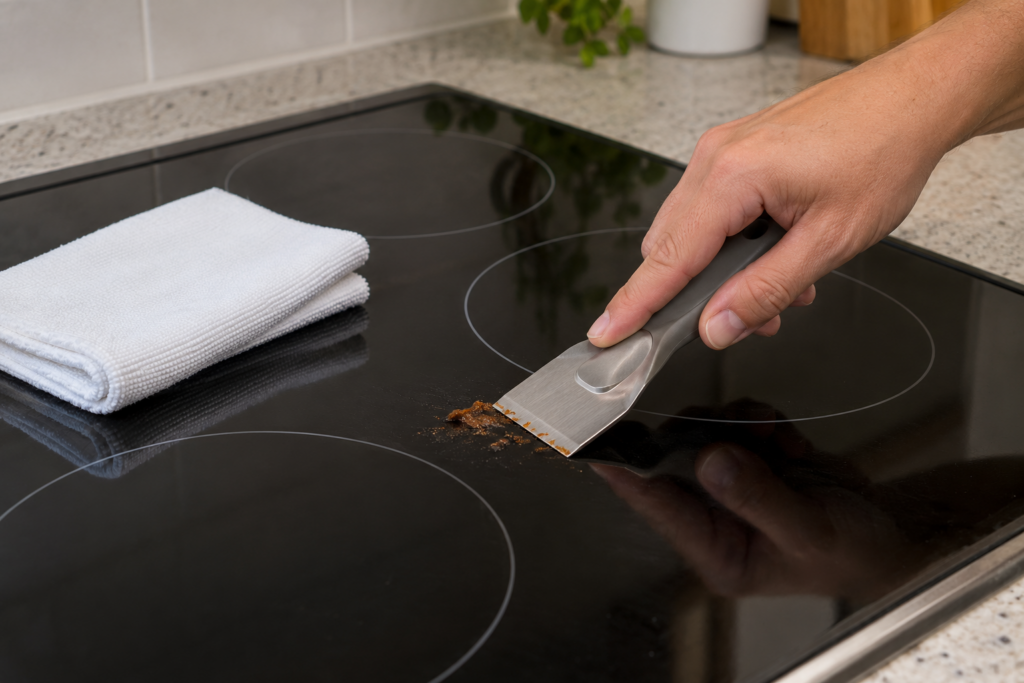
Yes, a scraper made for ceramic cooktops is the tool the site's glass care notice names for stubborn residue, used on a cooled surface. Hold it at a shallow angle and push in short strokes so that the blade lifts the soil and does not dig into the glass. Wipe up the loosened residue with a cloth, then finish with the cleaner.
A general kitchen knife or a metal spatula is the wrong tool, and a scraper with a chipped or rusty blade should be replaced. Do not scrape a hot zone, and do not scrape sugar or plastic that has melted until you have read what your use and care guide says for your model.
What Damages a Glass Cooktop Besides Cleaning
The same notice names the main hazards, and they are worth knowing because none of them is a fault in the cooktop.
- Dragging heavy pans. Cast iron should be lifted and placed, not slid across the glass.
- Dropped cookware. Heavy pans dropped from height can chip or crack the surface.
- Cold on hot. A cold pan or cold liquid on a zone that is still hot can crack the glass through thermal shock.
- Cookware that does not fit. On induction, use flat, magnetic-base cookware.
Impact cracks are typically not covered under the standard warranty, according to the same notice, so the habit is cheaper than the repair.
Keeping Water and Spills Away From the Edges
Because a spill that reaches a crack, or a seam, can get to the electronics underneath. The notice says a cracked induction cooktop must not be used, since liquid can penetrate the crack and reach the parts below, creating a shock hazard. For the controls themselves, the spilled liquid notice covers what to do when a spill has reached the panel.
Wipe spills as soon as the surface is safe to touch, and do not leave a wet cloth lying on the glass or against the control panel while you cook.
What Should You Not Use on a GE Glass Cooktop?
Anything abrasive, anything sharp that is not a cooktop scraper, and anything that leaves a film that bakes on at the next use. The notice names ceramic cooktop scrapers and recommended cleaners, which is as far as the site goes, so for named products check your use and care guide, whose list applies to your exact model.
- Scouring pads and powders. They scratch the glass, and the scratches collect soil.
- Kitchen knives and steel wool. They can score the surface and leave metal marks.
- Soaking wet cloths. Water runs into seams and toward the controls.
- Cleaner on a hot surface. It can bake on and leave a stain.
A Simple Routine for a GE Glass Cooktop
Routine is cheaper than rescue. A few short habits do most of the work.
- After each use. Wipe the cooled surface with a damp cloth and dry it.
- Weekly. Use the cooktop cleaner on the whole surface, not only on visible marks.
- Before each use. Glance along the glass for chips or hairline cracks, as the notice advises.
- Always. Lift pans, do not slide them, and let a hot zone cool before cold items go near it.
Check the residual heat indicator after cooking. The notice points out that an induction cooktop gives no visible sign that a zone is hot, so the indicator is what protects you from a burn when the pan is gone.
The method does not change with the type of cooktop, but the stakes do. On an induction model the glass sits directly over the coils and electronics, so a crack matters more, and the zone gives no visible sign that it is hot, which makes the residual heat indicator the thing to watch. On a radiant electric model the glass is hotter and stays hot longer, so the wait before cleaning is longer. On a gas cooktop with a glass or steel top, the same rule about cool surfaces and soft tools applies, and the burner parts have their own cleaning steps in your manual.
Whichever you own, the notice is clear that the glass should be inspected before each use, and that any crack means no use until it is replaced. A thirty-second glance along the surface in side light is the cheapest safety check in the kitchen.
When Cleaning Is Not the Answer
If a mark does not move with the cleaner and the scraper, it may be a scratch or a pit in the glass, and cleaning will not remove it. If you see a chip or a crack, stop and have the cooktop checked. Our GE range and oven maintenance guide covers the rest of the routine, and the induction glass care notice has the full list of steps. Range repair covers controls and surface faults, and the price is confirmed after diagnosis with a written estimate before work begins. You can schedule a visit or contact us with the model number.