 David Henderson
Key Takeaways
- A GE dishwasher diagnostic visit starts from $89, credited toward the repair, with the pump priced after the fault is confirmed.
- On many models the drain pump and its motor are one assembly, so pump and motor replacement go together.
- C1 is mostly a free fix, C2 is mixed, and C3 with a silent pump is the code that most often means a replacement.
- Access to the sump drives labor: the rack, filter and wash arm assembly come out first.
- Check the filter, the hose and the disposal knock-out plug before paying for a pump.
The Bottom Line
The GE dishwasher pump replacement cost starts from $89 for diagnosis, and a good share of drain codes turn out to be a filter or hose instead. On a sound dishwasher, a confirmed pump failure is usually worth repairing.
When a GE dishwasher stops draining and shows C1, C2 or C3, the pump is the part owners worry about, because it is the one that sounds expensive. The GE dishwasher pump replacement cost is easier to judge than most repair prices, since the fault narrows to a single assembly, but a good half of these calls never need a pump at all. This guide covers what drives the price and how to tell which kind of call you have.
| Cost factor | What it changes |
|---|---|
| Diagnostic visit | Confirms the pump rather than a clogged filter or hose |
| Pump or motor assembly | The main part cost; varies by model and platform |
| Labor to reach the sump | Includes lifting the lower assembly and the wash arm |
| Hose, seal or check valve | Often replaced in the same visit when worn |
What Is the GE Dishwasher Pump Replacement Cost?
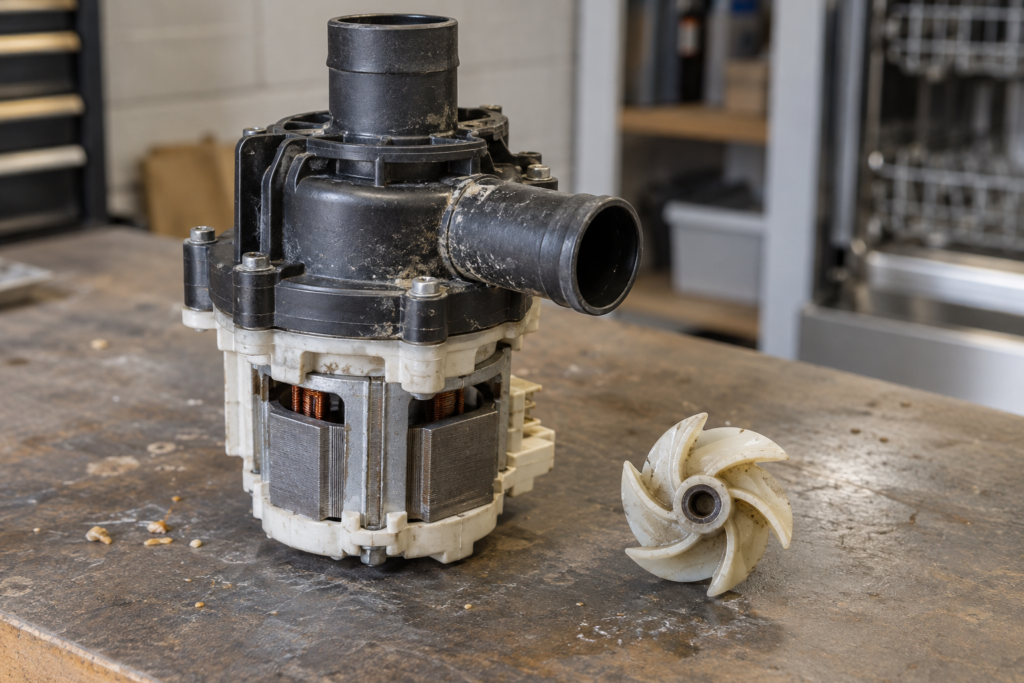
A diagnostic visit starts from $89, credited toward the repair if you go ahead, and the pump repair itself is priced after the technician has confirmed the fault. The part cost depends on your platform, and the labor reflects the work of getting into the sump. A GE dishwasher motor replacement cost follows the same pattern, because on many models the drain pump and its motor are a single assembly and are replaced together.
The final number is confirmed on site with a written estimate before any part is ordered. Quoting a firm price from a code alone would be guessing, and the next section shows why.
Which Codes Point to the Pump?
Three drain codes sit on this site, and they describe three different degrees of the same problem.
- C1 means the drain cycle exceeded two minutes. The pump may be running but struggling, and a clogged filter is the most common cause on GDT and GDF models. See the C1 page.
- C2 means total drain time went over seven minutes across the cycle. A weak pump or a partial blockage in the drain line fits; the C2 page has the checks.
- C3 means the dishwasher will not drain at all. A silent pump during the drain phase is the sign of a failed motor, and the C3 page says to stop running it.
- Humming but no movement points to a blockage or a jammed impeller rather than a dead motor, which is the cheaper outcome.
The pattern matters for cost. C1 is mostly a free fix, C2 is a coin toss, and C3 with a silent pump is the one that most often ends in a replacement. A code that appears once and never again is rarely a pump; a code that returns after every filter cleaning and every reset is the one to take seriously, and it is worth jotting down how many cycles passed between appearances before the technician arrives.
Four Things That Move the Price
Four things decide the bill, and only one of them is the pump itself. Seen from the owner's side, the part is the visible cost and the access is the hidden one. Access is the quiet one: reaching the pump means removing the lower rack, the filter and the wash arm assembly, and sometimes pulling the dishwasher forward from the cabinet, which adds labor on a built-in that is tight against the counter.
- Model and platform. Pump and motor assemblies are not universal, so the part price follows your dishwasher.
- Whether the sump is damaged. A cracked housing from broken glass can turn a pump swap into a larger job.
- Wear in the hose and seals. Replacing a tired hose in the same visit avoids a second call.
- Age of the dishwasher. The same repair means more on a six-year-old machine than on a fourteen-year-old one.
None of these can be read off the display, which is why a code on its own never produces an honest quote. The visit does that, and it ends with the figure in writing.
How Do You Tell a Weak Pump From a Dead One?
Listen during the drain phase. A pump that hums loudly and moves little water is usually blocked or has a worn impeller, and that is the cheaper repair. A pump that makes no sound at all, or hums briefly and goes silent as its thermal protector trips, has most likely lost its motor, and that is the case where the assembly is replaced.
Noise matters as much as silence. Grinding or screeching from the pump area can mean a piece of glass in the impeller, which is worth knowing before anyone opens the sump, because glass that has already scored the housing changes the quote. A short note to the technician, saying what you heard and when, saves diagnostic time and keeps the estimate honest.
- Loud hum, little movement: blockage or worn impeller, often fixable without a new pump.
- Silence at the drain phase: motor or wiring, the usual replacement case.
- Grinding or rattling: debris in the impeller; stop running the machine.
- Burning smell: stop at once and switch off the breaker; do not retry.
What to Check First, Because It Costs Nothing
Most C1 and many C2 codes clear without a part. Work through the free causes before you book, and tell the technician what you found.
- Clean the filter. Twist out the cylindrical filter and the fine mesh, rinse them and brush off grease. GE recommends doing this monthly.
- Trace the drain hose. With power off, look for a kink between the pump and the sink drain, and confirm the high loop or air gap is intact.
- Check the disposal. If the dishwasher drains into a garbage disposal, confirm the knock-out plug was removed when the disposal was installed.
- Run Cancel/Drain. If the tub empties, the blockage was the cause. If you hear nothing, stop; running repeated drain attempts on a silent pump can overheat the motor.
Our GE dishwasher not draining guide goes through the same sequence in more depth.
Is a Pump Replacement Worth It on an Older GE Dishwasher?
Usually yes if the rest of the machine is sound, because the pump is one well-understood part on an appliance that otherwise has years left. The case against is a dishwasher that has already needed a second major repair, or one old enough that a new unit is close in price. The C2 page itself flags a dishwasher more than eight years old that has never had pump service as a reason to call a professional rather than keep resetting it.
For the wider decision, the guide on whether a GE dishwasher is worth repairing covers the age and cost comparison, and GE dishwasher repair cost shows where a pump sits among the other repairs. To book, dishwasher repair includes the pump, the hose and the seals, and you can schedule a visit or contact us with the code and what you already tried.