 David Henderson
Key Takeaways
- E60 on a GE dryer means the control cannot confirm the door is closed; the switch, the latch or the door alignment can cause it.
- A door switch has nothing to repair: the repair is replacing it, and the decision is whether to replace the latch and strike with it.
- Check the latch, the strike, the click and the drum light before buying a part.
- A 30-second hard reset clears E60 if the switch is sound; a failed switch brings it back at the next start.
- If E60 persists after a new switch and latch, the wiring or control is the next suspect and a technician should test the circuit.
The Bottom Line
Replace a worn latch and strike first, replace the switch if E60 returns, and stop buying parts if a sound switch and latch still leave the dryer dead. The price is confirmed after diagnosis, with a written estimate before work begins.
Most owners meet the door switch only on the day the drum refuses to turn while the display happily lights up. The door switch tells the control that the door is shut, and without that signal the dryer is built to do nothing. The switch is one of the cheapest parts in the machine, which makes the decision unusual: the real question is rarely whether to replace the dryer, and usually whether the switch is the part at fault at all. This guide covers GE dryer door switch repair or replacement as a practical choice: what to look at, what to buy and the point where something else decides. It also sets out which of the steps are safe for an owner and which belong to a technician, since the dryer is connected to a high-voltage supply and sometimes to gas.
| What you find | Repair or replace the switch? | Why |
|---|---|---|
| Door closes but gives no click, latch looks worn | Replace the latch and strike first | The switch may be fine; the door is not reaching it |
| Latch is intact, E60 returns on every start | Replace the switch | The contacts are worn and will keep failing |
| Cycle stops partway through, E60 appears | Switch or door alignment | Vibration breaks a failing contact |
| Door and switch test fine, still no start | Look elsewhere | The cause is in the control or the wiring |
| Dryer very old with several faults | Weigh the whole machine | The switch is not the deciding cost |
What Does the GE Dryer E60 Code Point To?
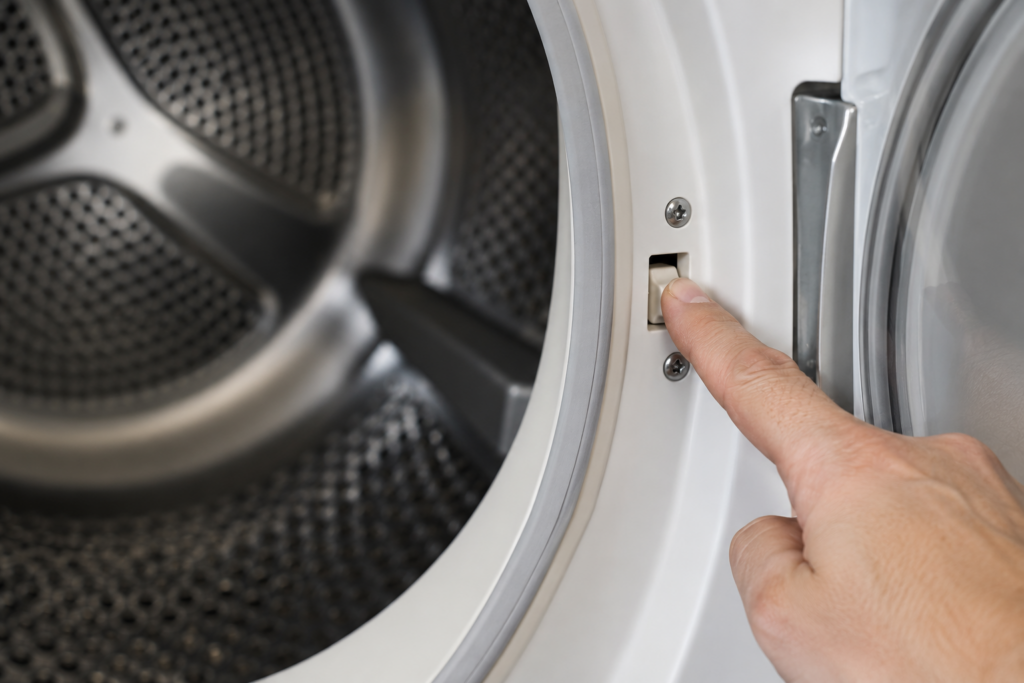
It means the control cannot confirm that the door is closed, and the E60 page names the door switch, the latch or strike and the alignment of the door as the causes. The switch is a micro-switch in the door frame that the door presses as it closes. When it stops sending a closed signal, the dryer will not start, because the design treats a dryer that could run with the door open as a hazard.
The page treats E60 as a low-severity code and lists all three causes as repairs a homeowner could do. That does not make every one a good idea at home, and the sections below separate the cheap checks from the ones that are better left to a technician.
Should You Repair or Replace a GE Dryer Door Switch?
Replace it. A door switch is a sealed part with moving contacts, and there is nothing in it to repair; the repair is the replacement. The decision to make is whether to replace the switch alone or the latch and strike with it, and that depends on what you find when you look. Our guide to repairing or replacing a GE dryer covers the larger question of the whole machine, and the door switch is almost never what tips it.
- Worn latch or strike. Replace those first; the page calls the latch an inexpensive part.
- Intact latch, failed switch. Replace the switch, and replace both if the dryer has had years of heavy use.
- Misaligned door. Tighten or adjust the hinge before buying parts.
- Cracked plastic anywhere on the latch. Treat it as a replacement, not a repair, and do not use the dryer until it is done.
Free Checks Before You Buy a Part
A few minutes of looking separates a failed switch from a door that is not quite shutting. Do these with the dryer unplugged or the breaker off, and do not remove any panels.
- Open the door and close it firmly. On GE front-load dryers the page says the latch takes slightly more force than on a top-load, so close it as you would a car door.
- Look at the latch and strike. Cracks, missing nubs or worn contact surfaces stop the door from reaching the switch.
- Watch the drum light. On a model with an interior light, it should go out when the door closes; a light that stays on points to the switch.
- Listen for the click. A healthy door closes with a clear one, and silence suggests worn parts.
- Do a hard reset. Unplug the dryer for 30 seconds, then restore power and try one cycle.
If a firm close and a reset bring the dryer back and it stays working, the earlier reading was probably a slam or a vibration. If E60 comes back at the next start, the page says a failed switch will retrigger it.
Can You Replace the Switch Yourself?
The page calls the replacement a common DIY repair, and for a handy owner it can be. It still means opening the dryer to reach a part wired into the machine, and the safe version is narrow. Always unplug the dryer first, not just switch it off, and keep the old switch and its wires in front of you until the new one is connected the same way.
- Use the part for your model. Switches and latches are not universal.
- Photograph the wiring before disconnecting. It saves a wrong connection.
- Stop at anything unexpected. Burned insulation or a gas dryer's supply line is a technician's job.
- Test with the door open. The drum must not start when the door is open.
When the Switch Is Not the Problem
If a new switch and a sound latch still leave a dryer that will not start, the cause is further along: the wiring between the door frame and the control, the control itself or another interlock. The page says to contact a technician if E60 persists after the latch and strike are replaced, or if the switch tests open with a multimeter when pressed.
That is the moment to stop buying parts. A technician can test the circuit and name the fault in one visit, and a diagnostic visit starts from $89, with the final price confirmed after diagnosis and a written estimate before any work begins. Related codes on the site, such as the E07 page for a stuck control panel button, can also stop a dryer from starting and look similar.
- E60 returns after the switch and latch are new. The circuit or control is the next suspect.
- The dryer starts then stops. Test the door alignment and the vibration before the switch.
- Several codes at once. The control, not the door, may be the common cause.
What to Do Next
Start with the free checks, replace the latch and strike if they are worn, then replace the switch if E60 persists. For a machine that is old and has more than one fault, read the GE dryer maintenance guide before deciding, since a dryer kept clear of lint tends to have fewer second faults. To arrange the repair, schedule a visit or read about GE dryer repair.