 David Henderson
Key Takeaways
- NO-COOL covers more than one cause — a running-but-not-cooling compressor and a fully silent one are diagnosed differently.
- Worth repairing a GE wine cooler compressor almost always yes on units under five years old or still under warranty.
- On units over eight years old, compare the compressor repair quote against a replacement cabinet before committing.
- HI and LO codes point at a sensor or setting issue, not the compressor, and cost far less to fix.
- Compressor work is sealed-system repair requiring certified refrigerant handling — not a do-it-yourself job.
The Bottom Line
Worth repairing a GE wine cooler compressor in most cases, especially on units under five years old — but diagnose first, since a running-but-not-cooling symptom is often a fan or leak, not the compressor itself.
A GE wine cooler that shows NO-COOL is describing a specific failure, and the question that matters is whether it is worth repairing a GE wine cooler compressor rather than replacing the whole unit. This is narrower than the general "should I fix my wine cooler" question, because the compressor is the single most expensive part in the cabinet, and the answer changes depending on which of two patterns the unit is showing.
| What you observe | Likely cause | Worth repairing? |
|---|---|---|
| Compressor runs, no temperature drop | Refrigerant loss or a failing compressor | Often yes — diagnose first |
| Compressor silent, rear panel cool | Compressor failure | Depends on unit age and cost |
| Interior only slightly warm | Vent, seal or thermostat issue, not the compressor | Yes — usually inexpensive |
| Unit under warranty or under 5 years old | N/A | Yes, repair |
What Does the GE Wine Cooler NO-COOL Code Mean?
NO-COOL means the cooling system is not reaching the temperature the control has been set for, and it is a category-level code covering more than one root cause. GE's own diagnostic page for this fault distinguishes between two very different situations behind the same three letters: a compressor that is running but not producing a temperature drop, and a compressor that has stopped entirely, identifiable because the rear panel — normally warm from the condenser — stays cool after the unit has been running for fifteen minutes or more.
The distinction matters because the first case is often fixable without a compressor replacement at all: a partial refrigerant leak, a failing condenser fan, or a blocked vent can all produce a running-but-not-cooling symptom. The second case, a genuinely silent compressor, is a heavier repair, and it is the one this guide focuses on.
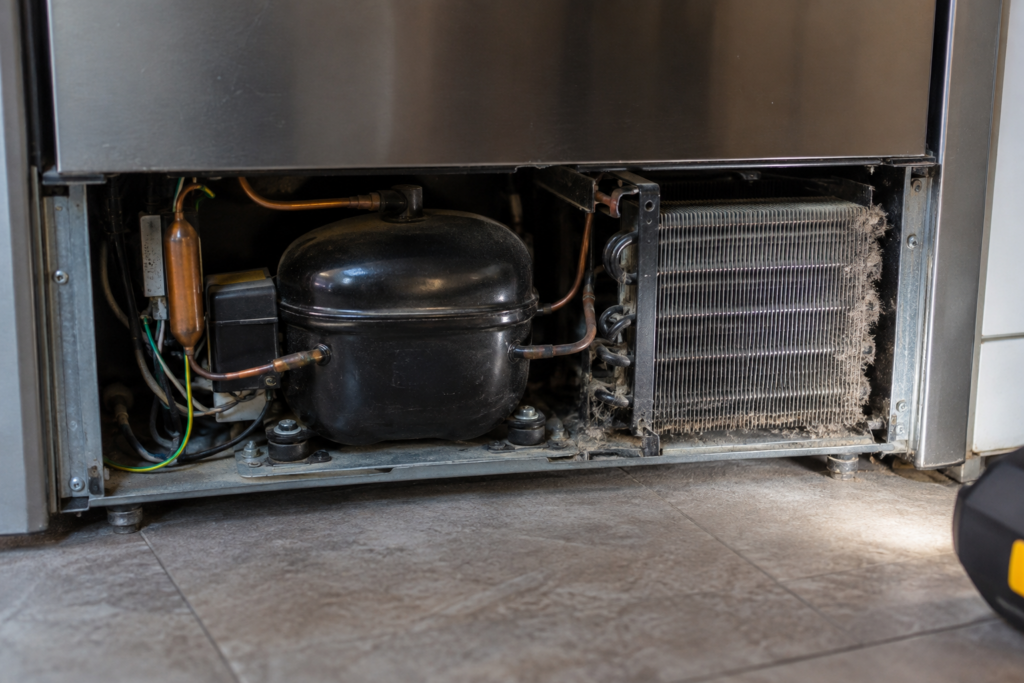
Is It Worth Repairing a GE Wine Cooler Compressor?
On a unit under five years old, yes — a compressor is a major part but not an unusual one to replace on a cabinet that otherwise has years of service left, and most wine cooler compressors carry a manufacturer warranty that runs longer than the rest of the unit. On an older unit, the decision comes down to two numbers: the cost of the compressor and refrigerant work against the cost of a comparable replacement cabinet, and how the rest of the unit is holding up — a compressor is rarely the only part nearing the end of its life on a unit that has run for a decade.
- Unit is under warranty: repair, and confirm coverage before paying for diagnostics.
- Unit is 2–5 years old with no other issues: repair — a compressor failure this early is unusual and worth fixing properly.
- Unit is over 8 years old with a silent compressor: compare the repair quote against a new unit before committing.
- Door seal, shelving or lighting also show wear: those add up alongside a compressor repair and shift the balance toward replacement.
This decision sits next to, but separate from, the broader question we cover in is it worth repairing a GE refrigerator — a wine cooler runs a lighter compressor duty cycle than a full refrigerator, which is part of why compressor failures inside the warranty window are less common than owners expect.
What a Compressor Repair Involves
- Diagnostic check to confirm the compressor rather than a refrigerant leak or a fan failure — these look similar from the outside but repair very differently.
- Refrigerant recovery before the sealed system can be opened, which requires certified equipment.
- Compressor replacement and a full recharge of the correct refrigerant type and amount.
- Leak test and run-in period to confirm the new compressor is holding pressure and reaching temperature.
This is sealed-system work, not a parts-and-screwdriver job, and it is one of the few repairs on this site we would actively discourage attempting without certification — refrigerant handling is regulated, and an improperly recharged system fails again quickly.
Telling the Compressor Apart From a Cheaper Fix
A few checks at home, done with the unit unplugged and the rear panel accessible, narrow the possibilities before you call for a diagnostic:
- Listen before unplugging it. A healthy compressor hums steadily; silence with the unit powered on is the strongest single sign of compressor failure.
- Feel the rear condenser area after 15 minutes of running. Warm means the compressor is working; cool means it likely is not.
- Check the door seal for gaps with a sheet of paper — a poor seal can mimic a cooling failure without the compressor being at fault at all.
- Confirm the vents inside the cabinet are not blocked by bottles pressed against the airflow path, which can also produce a warm-cabinet symptom.
If all four checks come back clean and the compressor is still silent, the fault is very likely the compressor itself rather than something upstream of it.
It is worth being honest about how often this actually happens. Compressor failure inside the first several years of ownership is uncommon on a wine cooler that has had reasonable airflow around it — most of the calls we get about a warm cabinet turn out to be a door seal that has hardened, a thermostat that has drifted, or bottles packed so tightly against the rear vent that the compressor cannot exchange heat properly no matter how well it is running. That is good news for the wallet, because those fixes cost a fraction of a compressor job, but it also means the home checks above are worth doing carefully rather than skipping straight to assuming the worst.
What Does This Repair Cost?
Diagnosing a GE wine cooler cooling fault starts from $89, and that visit is what determines whether you are looking at a compressor job, a simpler fan or seal repair, or a refrigerant leak — the three most common causes behind a NO-COOL code. A compressor replacement itself is quoted after diagnosis, in writing, before any part is ordered. If the unit instead shows HI or LO rather than NO-COOL, the fault is a sensor or setting issue, not the compressor, and is a far less expensive fix.
Our wine cooler repair service covers the sealed system, the fan, and the sensor network. Schedule a diagnostic before assuming the worst — a fair share of NO-COOL codes turn out to be a blocked vent or a weak door seal rather than the compressor at all, and those cost a fraction of what a compressor job runs. Keeping the rear vent clear and the coils free of dust, the same habits covered in our refrigerator and wine cooler maintenance guide, is the single best way to keep a healthy compressor from becoming an early failure — a unit that never has to fight for airflow simply runs its compressor less over its lifetime, and a compressor that runs less lasts longer.