 David Henderson
Key Takeaways
- A Profile costs more to replace, so a repair quote is a smaller share of a new unit and repair stays sensible for longer.
- Fan, defrost, damper and ice maker faults are contained repairs worth paying for on a unit under about ten years old.
- Sealed-system work and a compressor failure on an older unit are where the arithmetic turns toward replacing.
- An HRS code points at the control or display boards or a harness, so ask which one before deciding.
- Three repairs in twelve months, or two major parts in two years, tip toward replacing whatever the line.
The Bottom Line
Repair a Profile for mechanical faults while it is under about ten years old, and think hard about sealed-system and board work on an older one. The price is confirmed after on-site diagnosis, with a written estimate before work begins.
A Profile refrigerator with two doors above and a freezer drawer below costs a good deal more to replace than a basic model, and that changes how a repair quote should be read. The same bill is a smaller share of a new Profile, so repair stays sensible for longer. This guide is about that line specifically; for the whole range of GE refrigerators, the general advice is in our GE refrigerator worth-repairing guide.
| Age of the refrigerator | Repair worth it? | How to treat a quote |
|---|---|---|
| Under 5 years | Yes | Repair almost any failure |
| 5 to 8 years | Usually yes | Apply the 50 percent test, avoid sealed-system work |
| 8 to 12 years | Depends | Only mechanical repairs such as a fan or damper |
| 12 to 15 years | Rarely | Low-cost fixes only, and plan the replacement |
Is a GE Profile French Door Refrigerator Worth Fixing?
Usually yes while it is under about ten years old and the fault is mechanical. The table is the age scale this site uses for every GE refrigerator, and the site adds that a premium series widens the repair window by two to three years because its replacement costs so much more. So a Profile that is worth fixing is one with a fan, damper, defrost or ice maker fault, not one with a failed sealed system.
The kind of fault matters as much as the age. A Profile makes cold in one place and moves it with a fan and a damper, so many faults are a stopped fan or an iced duct, which are contained repairs. A leak in the sealed system or a failed compressor is different, and it belongs in the next section.
Which Profile Repairs Are Worth Paying For
These are repairs that restore full cooling or function and rarely mean the rest of the machine is failing.
- Evaporator fan (FF). A noisy or stopped fan is a common cause of a warm fresh food compartment.
- Defrost circuit (DF). A heater, thermostat or control failure that lets frost build over days.
- Damper. A stuck damper starves the fresh food side of cold air.
- Ice maker (CI). A contained repair that does not touch cooling.
- Door seal. A worn gasket is cheap to replace compared with the energy and food it costs you.
- Water filter and Sabbath mode. WF and Sb are messages, not faults, and cost nothing to clear.
The GE Profile refrigerator repair guide walks through these codes on the air path they belong to, so you can match the display to the part before the quote arrives.
Which Repairs Are Hard to Justify
Sealed-system work, meaning a compressor or a refrigerant leak, is where the arithmetic turns. The site's refrigerator guide describes these as expensive and often the end of economic life on an older unit, and recommends avoiding them between five and eight years old unless the quote is small. A confirmed refrigerant leak is a reason to stop and compare with a replacement.
- Compressor failure on a unit over about 10 years old. Rarely worth the bill.
- A second major part inside two years. Replace the pattern, not the part.
- A confirmed refrigerant leak. Compare the quote with the price of a new unit.
- An unnamed fault. A quote that says "board" without saying which one needs a second look.
Does an HRS Code Change the Answer?
It can, because it points at the electronics rather than at one worn part. The site's HRS page describes it as a loss of communication between the main control board and the display or dispenser board, with the fridge no longer cooling. The listed causes are a failed board, a display board or a damaged wiring harness, and the page says all of them need a technician.
A harness or a loose connector is a modest repair. A failed main board on a refrigerator past eight years old is the kind of bill that makes owners ask this question, so ask the technician which of the three it is before you decide.
How a French Door Layout Changes What Breaks
It changes where the wear is, not how the cooling works. Two fresh food doors and a freezer drawer mean more hinges, more door cycles and more wiring that passes through a hinge, and the HRS page names a harness that runs through the hinge as one of the places a break can occur. The freezer drawer and its slides take heavy loads every day.
- Door seals. Two doors and a drawer each have to seal, and a worn seal costs energy and cold.
- The hinge harness. Wiring that flexes with the door can chafe over the years.
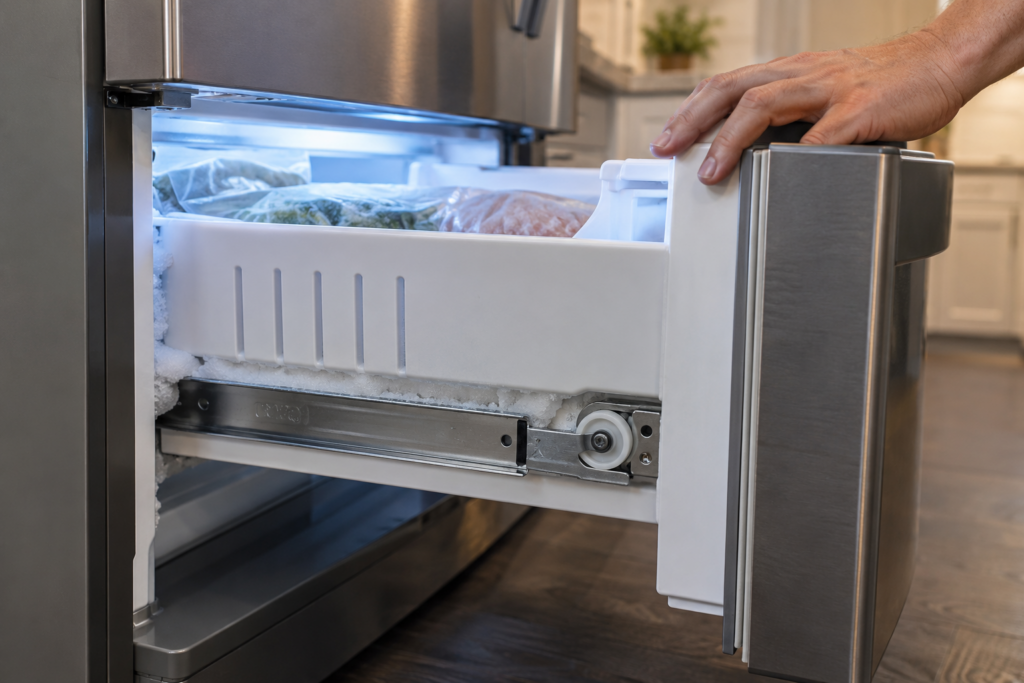
- The drawer and its rails. A sticking or noisy drawer is often a rail or a roller, which is a small repair.
None of these is a reason to replace a refrigerator on its own. They are the kind of parts that a good estimate lists separately, so you can tell a small repair from a pattern of wear.
How Old Is Too Old to Repair a Profile Refrigerator?
Past about twelve years, repair rarely pays unless the fix is small, and the site's guide describes parts availability declining beyond fifteen. The line name stretches the window but does not remove it. A Profile that is ten years old with one fan fault is a repair; the same unit with a failing compressor is a decision about replacement.
Count the history too. Three repairs in twelve months, or two major component replacements in any twenty-four months, tip toward replacing regardless of line. Keep a log of dates, symptoms and parts, and a sale or a warranty claim will thank you for it.
What to Ask Before You Accept the Quote
A good technician will tell you whether the fault is the first of a pattern or an isolated one, so ask directly. A fan fault on a refrigerator that has otherwise run without trouble is an isolated fault. A fan fault that follows a defrost repair last year suggests the defrost problem was never fully solved, and that is worth knowing before you pay for another part.
Ask for the part, the model number and the labor listed separately, and for the written estimate before any part is ordered. The model and serial number are on a label in the fresh food compartment, and a quote that does not name your model is a rough estimate.
Our GE refrigerator repair or replace guide covers the larger decision and the GE refrigerator repair cost guide shows what repairs involve. Refrigerator repair covers fans, defrost, dampers, ice makers and boards. The price is confirmed after on-site diagnosis, with a written estimate before work begins; schedule a visit or contact us with the code and the model number.