 David Henderson
Key Takeaways
- The GE refrigerator tC code means Turbo Cool mode is running — it is a feature, not an error.
- It normally clears on its own within a few hours of loading the fridge or after a power outage.
- tC that never clears, or is paired with a warm interior or a rapidly cycling compressor, is worth a service call.
- Other codes like HRS (high-temperature alarm) or DF (defrost failure) mean something different and should not be blamed on Turbo Cool.
- Diagnostic work on the control panel starts from $89, confirmed with a written estimate before repairs begin.
The Bottom Line
A GE refrigerator showing tC is almost always working correctly — Turbo Cool is a feature, not a fault. Only a tC that will not clear, or a second symptom alongside it, is worth booking a technician for.
A GE refrigerator that suddenly shows tC where the temperature normally sits has not broken. The GE refrigerator tC code means the Turbo Cool feature is running, not that a sensor has failed or a compressor has quit. It is one of the most-searched codes on this site precisely because it looks exactly like a fault and behaves like nothing at all.
| What you see | What it means | What to do |
|---|---|---|
| tC on the dispenser panel | Turbo Cool mode is active | Nothing — let it run |
| tC that will not clear | The button is stuck or was set twice | Press and hold Turbo Cool for 3 seconds |
| tC plus warm interior | Turbo Cool running but not helping | Check the vents and door seal next |
| tC alternating with another code | A second fault is present | Note both codes before calling for service |
What Does the GE Refrigerator tC Code Mean?
It means Turbo Cool is on. GE built this feature into most French-door and side-by-side refrigerators as a way to drop the interior temperature quickly after a big grocery run or a long power outage, and the display shows tC for as long as the mode stays active. It is a status message, not an error, and it carries none of the severity flags GE uses for genuine faults like a shorted sensor or a failed compressor relay.
The confusion is understandable. Nothing else on a GE refrigerator display looks quite like an error code and quite unlike one at the same time — two letters, no explanation, sitting where a temperature reading usually is. Owners who search for this code are almost always trying to rule out a fault, and the honest answer is that tC by itself rules one out.
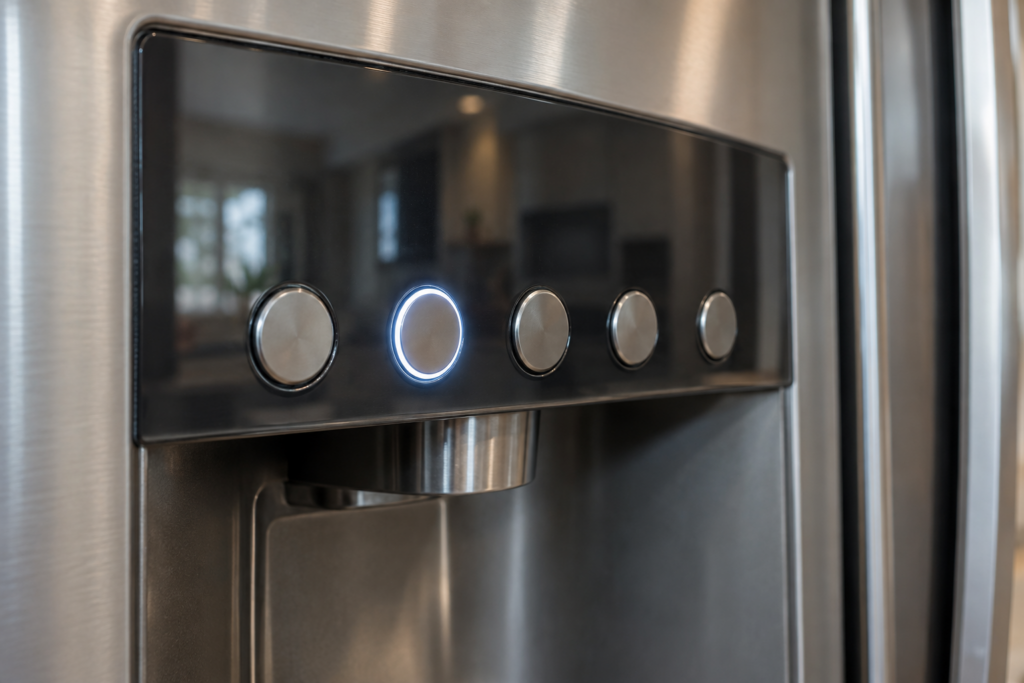
How Long Should Turbo Cool Run?
Turbo Cool typically runs for several hours before the control shuts it off automatically, though the exact window varies by model year. It draws the compressor and fans harder than normal operation, which is by design — the point is to pull the cabinet down several degrees faster than the default cycle would. A single activation after loading the fridge is normal use, not a symptom.
- One-time activation after shopping. Expect it to clear on its own within a few hours.
- Activation after a power outage. The control may re-engage it automatically to recover lost cold air, and that is also normal.
- tC every single day at the same time. That pattern points at a schedule setting or a button that keeps getting bumped, not a mechanical fault.
- tC that never turns off. A stuck relay behind the button is possible on older control boards, and that is the point to stop guessing and book a look.
When Is a tC Code Actually a Problem?
Rarely, but not never. Turbo Cool is a genuine load on the sealed system, and if the compressor is already marginal, running it harder can expose a weak unit sooner. The code itself is not the fault in that case — it is closer to a stress test that revealed one. Two follow-on symptoms turn a harmless tC into a real diagnostic lead:
- The interior stays warm after several hours of Turbo Cool running, which points at a restricted vent, a failing evaporator fan, or refrigerant loss rather than the feature itself.
- The compressor cycles on and off rapidly while tC is active, which is a sign of an electrical fault, not a cooling feature working as intended.
If either shows up, the next step is our guide to a GE refrigerator that is not cooling, which walks through the vents, the door seal, and the sealed system in order. A refrigerator that reports other alerts alongside tC — most often HRS, the high-temperature alarm, or DF, a defrost circuit failure — is telling you something different, and those codes should be read on their own terms rather than blamed on Turbo Cool.
Is It Safe to Keep Using a Refrigerator Showing tC?
Yes, by itself Turbo Cool is completely safe to run and safe to ignore. It is a feature, not a fault, and there is no version of this code that calls for shutting the refrigerator off or stopping its use. The only reason to stop using the unit is a second symptom — persistent warmth, unusual noise, or an actual fault code — appearing alongside it, and those would be reasons on their own regardless of whether tC happened to be showing at the time.
Regular upkeep still matters here. A refrigerator that has to lean on Turbo Cool often because the vents are blocked by packed shelves, or the condenser coils are coated in dust, will wear its compressor down faster than one that rarely needs the boost. Our GE refrigerator maintenance guide covers the coil cleaning and vent-clearance schedule that keeps Turbo Cool an occasional tool instead of a daily crutch.
A few habits keep Turbo Cool doing its job without masking a bigger issue:
- Leave the interior vents uncovered. Shelves packed against the back wall block the cold-air path Turbo Cool depends on to work quickly.
- Vacuum the condenser coils twice a year. Dust-coated coils make every cooling mode, including Turbo Cool, run longer than it should.
- Give the door seal a wipe-down monthly. A weak seal forces Turbo Cool to fight a slow leak of cold air it was never meant to offset.
- Note the date the last time Turbo Cool ran if you use it often — a feature that used to be occasional and has become daily is worth mentioning to a technician even before a second symptom shows up.
- Avoid holding the door open while loading groceries. Long door-open periods trigger the same compressor strain Turbo Cool is meant to correct.
- Confirm the temperature setting itself before assuming tC is compensating for anything — a setting bumped too warm by accident looks a lot like a cooling problem.
What a Service Visit Covers If tC Will Not Clear
If Turbo Cool is stuck on, or the panel has stopped responding correctly, a technician tests the button contact, the control board input, and the compressor relay before touching anything mechanical. Diagnostic work on a GE refrigerator control panel starts from $89, and the exact repair cost is confirmed only after the unit has been opened up and the fault isolated — you get a written estimate before any part is ordered or any work begins. Our GE refrigerator repair service covers the control panel, the sealed system, and the sensor network in one visit.
Most calls about this code end the same way: nothing was wrong, Turbo Cool did its job, and the fridge went back to normal on its own. If yours has not, or if a second symptom showed up alongside the letters on the display, schedule a visit and describe exactly what the panel is showing — that detail alone often tells a technician what to bring on the truck. A wider look at warranty coverage for control-panel repairs is in our GE appliance warranty guide, since a stuck button on a refrigerator still under coverage may not cost anything at all.